A Turkish trademark registration runs for ten years from the filing date and can be renewed indefinitely in further ten-year terms. Renewal is a formal step that rewards early planning and accurate register details.
- Registration lasts ten years from the filing date and may be renewed indefinitely in further ten-year terms.
- Renewal may be requested in the final six months of the term, with a later grace period subject to a surcharge.
- Owner details and assignments should be recorded before renewal, and continued non-use can expose a registration to revocation.
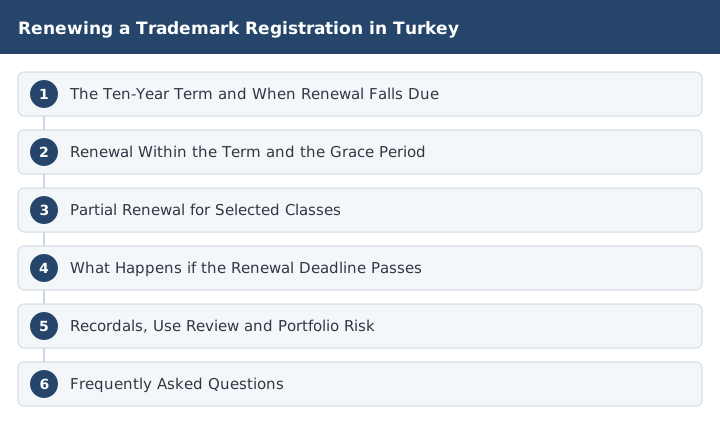
The Ten-Year Term and When Renewal Falls Due
Protection for a registered Turkish trademark lasts ten years, calculated from the filing date rather than from the date on which the registration certificate is issued. The term may be renewed indefinitely, each renewal running for a further ten years. Because the anchor is the filing date, owners who diarise only the registration date can misjudge when renewal falls due, particularly where examination or opposition proceedings extended the time before the mark reached the register.
For international registrations designating Türkiye, renewal of the international registration is handled centrally through the international system, while nationally filed registrations are renewed before TÜRKPATENT. Portfolios often contain both, and a single schedule that mixes them without noting the route can produce missed dates. A short audit of each mark, recording the filing date, the route, the current owner of record and the classes covered, is reliable preparation for any renewal cycle.
Renewal Within the Term and the Grace Period
A renewal request may be made during the final six months of the current ten-year term. This window is the normal route and the one that should be diarised. Filing within it keeps the registration continuous and avoids questions about the status of the mark when it is relied upon in oppositions, customs recordals or licence negotiations. Official renewal fees apply and must be confirmed from the published tariff of TÜRKPATENT before the request is submitted.
If the term expires without a renewal request, a further six-month grace period follows, during which renewal may still be requested subject to a surcharge. The amount of any surcharge is set by the official tariff and should be checked at the time rather than assumed. The grace period is a safety net and not a plan, because a mark in that condition can complicate assignments, due diligence and enforcement steps that depend on an unambiguous registration status.
Partial Renewal for Selected Classes
Renewal does not have to cover the whole specification. An owner may renew for some of the registered classes and allow the remainder to lapse, which is often sensible where the business has narrowed or where classes were included for a product line that was never launched. The renewed registration then continues only for the classes requested, and the goods or services left out of the request fall away once the current term ends.
Partial renewal deserves a commercial review rather than an automatic decision. Dropping a class reduces the register position that supports oppositions and infringement claims, and refiling later means a new filing date standing behind any intervening rights. Where a class covers goods that are still sold, or that the owner expects to return to within the coming term, the safer course is usually to renew and revisit the question at the next cycle.
What Happens if the Renewal Deadline Passes
When neither the renewal window nor the grace period is used, the registration lapses and the rights flowing from it come to an end. The mark leaves the register, and third parties are then free to file identical or similar signs without that registration standing against them. Recovering the position generally means filing afresh, accepting a later filing date and living with whatever has been placed on the register in the meantime.
Unregistered use may still support certain claims, but it is a weaker and more expensive footing than a live registration. Practical protection against lapse is procedural rather than legal: keep renewal dates in a system that does not depend on one individual, confirm the owner's current contact details, and instruct early enough for documents and official fees to be dealt with inside the window rather than in the grace period.
Trademark protection in Türkiye rests on Industrial Property Law No. 6769 and the secondary legislation made under it. Applications, renewals and register recordals are examined and administered by the Turkish Patent and Trademark Office (TÜRKPATENT). mevzuat.gov.tr
Recordals, Use Review and Portfolio Risk
Changes in the owner's name, address or corporate identity, together with assignments and mergers, should be recorded before renewal is requested. Where the register still shows a predecessor entity or a former address, correspondence can fail to reach the right party and the renewal record will not match the owner's own documents. Recordals matter for later steps as well, because evidence of title is examined in oppositions, cancellation proceedings and enforcement actions.
Renewal is also a sensible moment for a use review. A registered trademark that has not been genuinely used in Türkiye for an uninterrupted period of five years may be subject to revocation for non-use, so renewing an unused mark preserves a vulnerable right rather than a secure one. This page is general information and not legal advice; current requirements and official fees should be confirmed for the specific mark before any deadline is relied upon.
Frequently Asked Questions
How long does a Turkish trademark registration last?
Ten years from the filing date. The registration may be renewed indefinitely, each renewal covering a further ten-year term.
Can renewal still be requested after the term has expired?
Yes. A six-month grace period follows expiry, during which renewal may still be requested subject to a surcharge set by the official tariff.
Is it possible to renew for only part of the classes?
Yes. Renewal may be limited to selected classes, and the classes left out of the request cease to be covered once the term ends.
Renewal and Recordal Support in Türkiye
Yıldırım Patent handles renewals, partial renewals and register recordals for foreign owners and their counsel in Türkiye. Send the registration numbers and the current owner details, and you will receive a written note of the applicable deadlines, the documents required and a fee quotation for the matter, with official fees taken from the published tariff.
Contact