A Madrid Protocol designation of Türkiye is examined nationally by TÜRKPATENT under Turkish standards. This page explains the examination, provisional refusals, opposition after publication, dependency on the basic mark, and when a national filing works better.
- A designation of Türkiye is examined by TÜRKPATENT under national practice, exactly like a domestic trademark application.
- A provisional refusal or an opposition requires a registered Turkish trademark attorney, since the holder cannot act alone.
- For five years the international registration depends on the basic mark, which is the central attack risk.
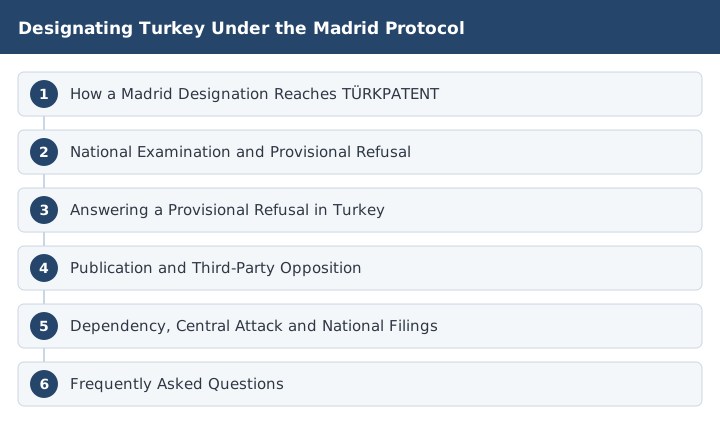
How a Madrid Designation Reaches TÜRKPATENT
An international registration designating Türkiye is filed through the World Intellectual Property Organization on the basis of a mark already applied for or registered in the applicant's home office. Once the designation is recorded, it is forwarded to TÜRKPATENT, which treats it in substance as a national application. From that point the fate of the mark in Türkiye is decided under Turkish practice, and the international route affects how the request arrives, not the substance of the examination.
The attraction of the Madrid route is administrative. One request, one language and one central file cover several countries, and later changes of ownership or address can be recorded centrally. What the route does not do is harmonise examination. Turkish classification practice, the way goods and services are worded, and the assessment of earlier rights all follow local standards, so a specification drafted for another jurisdiction may be read quite differently once it reaches Türkiye.
National Examination and Provisional Refusal
TÜRKPATENT examines the designation on absolute grounds and also searches earlier trademarks. A sign that is descriptive for the goods claimed, that lacks distinctive character, or that conflicts with an identical or indistinguishably similar earlier right for identical goods may be refused wholly or in part. Classification and wording are reviewed as well, and terms that pass elsewhere are sometimes considered too broad or too vague for the Turkish register and are objected to.
Where an objection arises, the office issues a provisional refusal and notifies the international bureau, which passes it to the holder. A provisional refusal is not a final loss of rights. It states which goods or services are affected and on what basis, and it opens a period for reply. That period is set by the office notification, so the applicable term must be confirmed from the notification itself rather than assumed from another country's practice.
Answering a Provisional Refusal in Türkiye
A holder without a domicile or a place of business in Türkiye cannot act before TÜRKPATENT alone. Once a provisional refusal, an opposition or any other contentious step arises, a registered Turkish trademark attorney must be appointed, and the appointment is recorded so that all further correspondence runs through that representative. Appointing a representative early is usually cheaper than reacting late, because the deadline runs from the notification and is not extended by the search for counsel.
The reply itself is a substantive submission. Depending on the ground raised, it may argue distinctiveness, restrict or reword the specification, distinguish the cited earlier mark, or rely on coexistence or consent where that is available. Evidence of use in Türkiye can matter where acquired distinctiveness is claimed. If the refusal is maintained, the decision may be taken to the Re-examination and Evaluation Board of TÜRKPATENT within the period stated in the notification, which must be confirmed.
Publication and Third-Party Opposition
A designation that passes examination is published in the Official Trademark Bulletin in the same way as a national application. Publication opens the file to third parties, and any interested party may file an opposition within two months from publication. Opposition is the most common reason why a designation that survived examination still fails in Türkiye, because the office does not refuse an application of its own motion on the basis of every similar earlier mark.
An opposition is notified to the holder and is answered through a Turkish representative. The usual grounds are earlier registrations or applications, likelihood of confusion, the reputation of a well known mark, unregistered prior use in Türkiye and bad faith. Because the exchange is adversarial and conducted in Turkish, watching the Bulletin and reacting quickly matters more than the filing route chosen at the outset. The outcome may confirm, refuse or partially limit the designation.
Trademark protection in Türkiye, including the national effect of an international registration, is governed by Industrial Property Law No. 6769 and the secondary legislation adopted under it. Examination, publication, opposition and administrative appeals are handled by the Turkish Patent and Trademark Office (TÜRKPATENT). mevzuat.gov.tr
WIPO — Madrid SystemDependency, Central Attack and National Filings
For five years from the date of the international registration, the designation in Türkiye depends on the basic mark in the home office. If the basic application or registration is refused, withdrawn or cancelled during that period, the international registration falls with it in every designated country, a risk generally described as central attack. Transformation into national applications is possible but costs time and effort. After five years the international registration becomes independent of the basic mark.
A direct national filing is often preferable where the basic mark is fragile or still under examination, where the specification needs to be tailored to Turkish practice from the outset, or where a contested file is expected and local control is wanted from the first day. The content of this page is general information and not legal advice, and current requirements and periods should be confirmed. Official fees must be confirmed from the office's published tariff.
Frequently Asked Questions
Do I need a Turkish representative for a Madrid designation of Türkiye?
Not to obtain the designation itself. A holder without a domicile or place of business in Türkiye must, however, act through a registered Turkish trademark attorney as soon as a provisional refusal, an opposition or any other contentious step arises, and the appointment is recorded with TÜRKPATENT.
Can a designation of Türkiye be opposed by a third party?
Yes. After examination the designation is published in the Official Trademark Bulletin and any interested party may oppose it within two months from publication, on grounds such as earlier rights, likelihood of confusion, the reputation of a well known mark, or bad faith.
What happens if my basic mark is cancelled?
During the first five years the international registration depends on the basic mark, so its refusal, withdrawal or cancellation brings the designation of Türkiye down with it. Transformation into a national application may be available. After five years the international registration is independent.
Turkish Counsel for Madrid Designations
Yıldırım Patent acts for foreign companies and foreign IP counsel before TÜRKPATENT on provisional refusals, oppositions and appeals concerning designations of Türkiye, and advises on whether a national filing is the better route in a given case. Official fees must be confirmed from the office's published tariff.
Contact